

How to Measure Yourself for Perfect Fit: 2026 Guide
Table of Contents
- What You'll Need Before You Start Measuring
- How to Measure Bust for Clothing (Step by Step)
- Measuring Your Waist, Hips, and Other Key Numbers
- Understanding Size Charts for Women's Apparel
- Common Mistakes When Measuring Body Size (and How to Fix Them)
-
How Body Type Changes Your Measurements and Fit
- If You Carry Weight in Your Hips and Thighs (Pear Shape)
- If You Carry Weight in Your Midsection (Apple Shape)
- If Your Bust and Hips Are Balanced (Hourglass Shape)
- If Your Shoulders Are the Widest Point (Inverted Triangle Shape)
- If Your Bust, Waist, and Hips Are Similar (Rectangle Shape)
- A Note on Petite and Tall Proportions
- Which Number to Trust for Each Garment
- Troubleshooting Fit Issues After You Measure
- Conclusion: Keep a Measurement Log for Perfect Fit Every Time
- Frequently Asked Questions
Last Updated: October 2, 2026
What You'll Need Before You Start Measuring
Getting a perfect fit starts with a soft cloth measuring tape, a mirror, and a few quiet minutes.
At Marlee Janes, we hear the same worry: "Online sizing never works for me." Most fit problems come from rushed measurements, not your body.
Here's what to gather before you start:
- A soft cloth measuring tape (not a metal carpenter's tape)
- A full-length mirror, or a friend who can spot-check the back
- Light, fitted clothing or your usual undergarments
- A pen and paper, or a notes app for your measurement log
- Five to ten minutes with no distractions
Check your tape first: hold it against a ruler to confirm it hasn't stretched.
How to Measure Bust for Clothing (Step by Step)
To measure your bust for clothing, wrap the tape around the fullest part of your bust, keep it level, and read the number where the tape meets. Stand tall and don't pull tight.
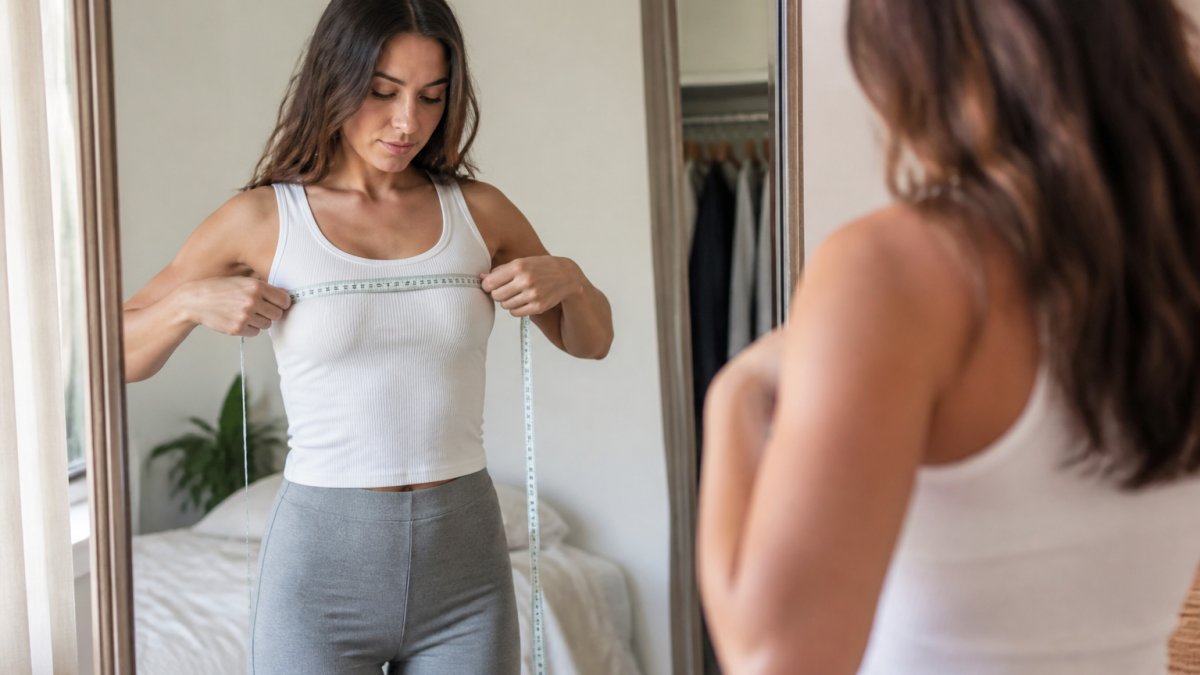
Positioning the Tape at the Fullest Part of the Bust
The fullest part of the bust is usually level with your nipples, but not always, find the point where your bust projects the most and run the tape around that line. Keep the tape flat against your back; if it dips or twists, your number reads low.
Checking Tape Tension and Level
Tape tension is where most people go wrong: pull too hard and you shave off inches, leave it loose and you add them. Aim for snug but not tight, flat against your skin, with room for one finger, and check that the tape runs parallel to the floor.
Measuring Your Waist, Hips, and Other Key Numbers
Your natural waistline is the narrowest part of your torso, usually just above your belly button. Your hips are widest at the fullest part of your seat, not at your hip bones.
Finding Your Natural Waistline
Bend sideways, the crease that forms is your natural waistline. Stand straight and wrap the tape around that crease, level and snug. Don't suck in; breathing naturally gives you the real number.
Locating the Widest Part of the Hips
Stand with your feet together and find where your seat projects the most, that's your hip measurement point, often lower than people expect. Run the tape around that widest point, parallel to the floor, and check the back in a mirror.
While you're at it, grab a few more numbers:
- Shoulder width: from the edge of one shoulder to the other, across your back
- Inseam: from your crotch to your ankle bone, down the inside of your leg
- Torso length: from your shoulder to your natural waist
- Waist-to-hip ratio: divide your waist number by your hip number
Write every number down. You'll use them again.
Understanding Size Charts for Women's Apparel
A size chart is a table of body measurements brands use to assign sizes, not a promise about how a garment will fit. Every brand builds its chart around a fit model, so your size at one shop may not match another.
Here's how to read a chart without getting burned:
- Match your bust, waist, and hip numbers to the chart, one at a time
- If you fall between two sizes, size up for woven fabrics and size down for knits
- Check the finished garment measurements when a brand lists them
- Look for "ease," the extra room built into a garment beyond your body size
Common Mistakes When Measuring Body Size (and How to Fix Them)
The same mistakes show up again and again, mostly from measuring over clothes, rushing, or holding the tape wrong. Fix these and your numbers get reliable.
- Measuring over thick clothing. Fix: measure in light layers or your undergarments.
- Pulling the tape tight. Fix: keep it snug, with room for one finger.
- Letting the tape tilt. Fix: check the level in a mirror at the sides and back.
- Holding your breath. Fix: breathe out normally before you read the number.
- Measuring alone without a mirror. Fix: use a mirror, or ask someone to check the back.
- Reusing old numbers. Fix: remeasure every few months, since bodies change.
Here's a quick reference for the fixes:
| Mistake | What It Does | The Fix |
|---|---|---|
| Tape too tight | Reads small, causes returns | Leave room for one finger |
| Tape tilted | Adds or drops inches | Check level in a mirror |
| Measuring over clothes | Adds fabric bulk | Measure in light layers |
| Holding your breath | Reads smaller than reality | Breathe out, then read |
| Stale numbers | Fit drifts over time | Remeasure every 3-6 months |
How Body Type Changes Your Measurements and Fit
Two people can share the same bust and hip numbers and still need different sizes, because body contour changes where a garment pulls, gapes, or hangs.
If You Carry Weight in Your Hips and Thighs (Pear Shape)
Your hip number usually runs two or more sizes above your bust number. That gap is normal, and it's the number that matters most for pants, skirts, and fitted dresses.
- Measure your hips at the widest point of your seat, not at the hip bones. For pear shapes, that point often sits three to four inches below the waist.
- Measure your high hip too, the point about three inches below your natural waist, where the iliac crest sits. This is where low-rise and mid-rise waistbands actually land, and it's often two to three inches larger than your natural waist.
- When a size chart forces you to pick one size, buy for your hip and have the waist taken in. Tailoring a waistband down is a routine alteration; letting out a hip is not.
If You Carry Weight in Your Midsection (Apple Shape)
Your waist may measure close to or larger than your bust. Standard charts assume a ten-inch bust-to-waist drop, so you'll often fall between sizes.
- Measure your natural waist at the crease, but also measure your widest point around the midsection, usually one to two inches below the belly button. Use the larger number when shopping for woven tops and dresses.
- For pants, measure your high hip and your natural waist. If the difference is small, look for styles with elastic side panels or a contoured waistband, which follow the body instead of cutting across it.
- Empire-waist and A-line dresses are cut to skim the midsection. When a chart gives you a choice, size to your bust for these styles, not your waist.
If Your Bust and Hips Are Balanced (Hourglass Shape)
Your bust and hip numbers are within about five percent of each other, and your waist is roughly ten inches smaller. Charts are usually built for this shape, so you'll often match a size cleanly.
- The measurement that trips up hourglass shapes is the underbust or band size, not the full bust. Measure snugly around your ribcage just under your bust, then subtract that from your full bust number. A one-inch difference is an A cup, two inches is a B, three is a C, and so on.
- For button-front shirts, measure your full bust and add one inch of ease. A shirt that fits at the bust but gaps between buttons needs a larger cup cut, not a larger size.
If Your Shoulders Are the Widest Point (Inverted Triangle Shape)
Your shoulder width or bust may exceed your hip measurement. Tops and jackets will feel tight across the back first.
- Measure shoulder width from the bony point of one shoulder to the other, across the back, not across the front.
- Measure your upper bust, the circumference just above your bust and under your armpits. For inverted triangle shapes, this number often runs one to two inches larger than the size chart expects for your hip size.
- When a chart forces a choice, size to your shoulder and upper bust for tops and jackets, and size down for skirts and wide-leg pants.
If Your Bust, Waist, and Hips Are Similar (Rectangle Shape)
Your measurements fall within a few inches of each other, so no single number stands out. Fit problems show up as garments that hang straight and feel boxy.
- Measure your waist at the narrowest point, even if the difference from your bust is only two or three inches. That small difference is what defines where a waistband should sit.
- Look for garments with defined waists, belted coats, wrap dresses, high-rise jeans, and measure your natural waist carefully so you can match the garment's waist position to your own.
A Note on Petite and Tall Proportions
Body type isn't only about circumference. Torso length and inseam change where a garment's waistline lands.
- Measure your torso length from the top of your shoulder, over your bust, to your natural waist. If it's under about sixteen inches, you likely have a shorter torso; over about eighteen inches, a longer one.
- Measure your inseam from your crotch to your ankle bone. Petite sizing typically assumes an inseam around 28 to 30 inches; tall sizing around 33 to 35 inches. If your inseam falls outside those ranges, check the garment's listed inseam before you buy.
Which Number to Trust for Each Garment
Match the size to the part of your body the garment actually hugs:
- Fitted tops: go by bust and shoulder width
- Jeans and trousers: go by hip, high hip, and inseam
- Dresses: go by the largest of your bust, waist, or hip numbers
- Knitwear: go by bust, since knits stretch
- Button-front shirts: go by full bust plus one inch of ease
- Jackets and blazers: go by shoulder width and upper bust
Troubleshooting Fit Issues After You Measure
Even with good numbers, some garments still feel off. Most fit problems have a clear cause and a clear fix, and each points back to a measurement you can re-check.
The Diagnostic Method
When something doesn't fit, work through three questions:
- Where does it pull, gap, or bunch? Note the exact spot, bust, waist, high hip, shoulder, or sleeve.
- Which measurement controls that spot? Match the problem area to the number below.
- Is the number wrong, or is the garment cut wrong? Re-measure the controlling number; if it matches the size chart, the cut is the issue, not your measurement.
Bust and Torso Problems
- Gapping at the bust between buttons. The top is cut for a smaller cup than you have. Re-check your full bust and your upper bust. If the difference is more than about three inches, you need a larger cup cut, not a larger size. Try a size up and have the waist taken in, or look for brands that list cup sizing.
- Pulling across the chest. The full bust measurement on the chart is smaller than yours. Re-measure at the fullest point with the tape level. If your number is correct, size up and tailor the shoulders and waist.
- Riding up at the waist. The garment's rise is shorter than your torso length. Re-measure your torso length from shoulder to natural waist. If it's over eighteen inches, look for a longer rise or a tall cut.
- Tops running short. Your torso length exceeds the fit model's. Re-check torso length and compare it to the garment's listed length before buying.
Waist and Hip Problems
- Waistband gaps at the back. Your natural waist is smaller than the chart's assumption for your hip size. Re-measure your natural waist at the crease. If your waist-to-hip ratio is below about 0.75, buy for your hip and have the waist taken in.
- Pulling across the hips. The hip measurement on the chart is too small. Re-measure at the widest point of your seat, not at the hip bones. If your number is correct, size up and tailor the waist.
- Waistband digs in when you sit. The rise is too short, or the waistband sits at your high hip instead of your natural waist. Re-measure your high hip, the point about three inches below your natural waist. If it's larger than your natural waist by more than two inches, look for a contoured waistband.
- Pants too long or too short. Your inseam differs from the fit model's. Re-measure from crotch to ankle bone. Compare to the garment's listed inseam before buying.
Shoulder and Sleeve Problems
- Shoulders too tight. The garment is cut narrow. Re-measure your shoulder width from bony point to bony point across the back. If your number is correct, size up or pick a style with a dropped shoulder.
- Sleeves too short. Your arm length differs from the fit model's. Measure from the top of your shoulder, over a slightly bent elbow, to your wrist bone. Compare to the garment's listed sleeve length.
- Armhole cutting into the underarm. Your upper bust is larger than the chart expects. Re-measure your upper bust just above your bust and under your armpits. If it's more than an inch above the chart's number for your size, size up.
When the Problem Is the Garment, Not You
Sometimes your measurements are right and the garment is still wrong. Three signs the cut is the issue:
- The size chart lists only letters, with no body measurements. You have nothing to match against.
- The finished garment measurements, when listed, are smaller than your body measurements plus the expected ease. A woven top usually needs about two inches of ease at the bust; a fitted knit needs less.
- The garment fits at one point and fails at another by more than one size. That's a cut problem, not a sizing problem.
Keep a Fit Log, Not Just a Measurement Log
A measurement log tells you your numbers; a fit log tells you what they mean for each brand. Track the brand and style, the size you ordered, and the measurement that was off, and by how much. After two or three entries, patterns show up: which brands run small in the hip, which run short in the torso, and which size chart to trust for your shape.
Fit problems are data, not failure. Every return tells you which number to check next time, and which brand to size up or down for.
Conclusion: Keep a Measurement Log for Perfect Fit Every Time
Sizing shouldn't feel like a gamble. A simple measurement log turns guesswork into a repeatable process, the fastest way to a perfect fit every time you shop.
At Marlee Janes, we build our size range for real bodies, with women's and tween styles in inclusive sizing. Our online store makes it easy to check a size chart before you buy, and our clear shipping and return policies mean you're not stuck if something doesn't work.
Frequently Asked Questions
Should I wear clothes while taking my body measurements?
Wear minimal clothing: a fitted tank top and thin leggings or underwear work best. Bulky sweaters, jeans, and padded bras add inches that throw off your numbers. If you are measuring for a specific garment like a sweater top, wear the undergarments you plan to wear with it. Stand in front of a mirror so you can check that the tape stays level and parallel to the floor as you measure.
Why do clothing sizes vary so much between brands?
There is no single enforced standard for women's apparel sizing in the United States, so each brand builds its own size chart. A medium at one store can match a small or large at another. That is why your measurements matter more than the size label. Always compare your bust, waist, and hip numbers against the specific brand's size chart before ordering, and check finished garment measurements when they are listed.
How do I measure my bust, waist, and hips accurately?
Use a cloth measuring tape, not a metal one. For your bust, wrap the tape around the fullest part of the bust, keeping it parallel to the floor and snug but not tight. For your waist, find your natural waistline (the narrowest point above your belly button, usually near the bend of your torso). For your hips, measure the widest part. Breathe naturally and write each number down in a measurement log.
How often should I re-measure myself for clothing?
Re-measure every three to six months, or any time your weight, fitness routine, or body changes noticeably. Measurements shift with age, pregnancy, and seasonal activity levels. Keeping an updated measurement log means you can order online with confidence instead of guessing. If a garment arrives and fits differently than expected, re-check your numbers against that brand's size chart before assuming the size was wrong.
Online sizing gets easier the moment you stop guessing. Marlee Janes offers a curated range of wardrobe essentials, from the Lindsey Sweater Top to everyday staples, with inclusive sizing for women and tweens. Check the size chart, order through our easy Shopify checkout, and rely on our transparent return policy if a fit needs a second look. Get started with Marlee Janes and find pieces that fit right the first time.